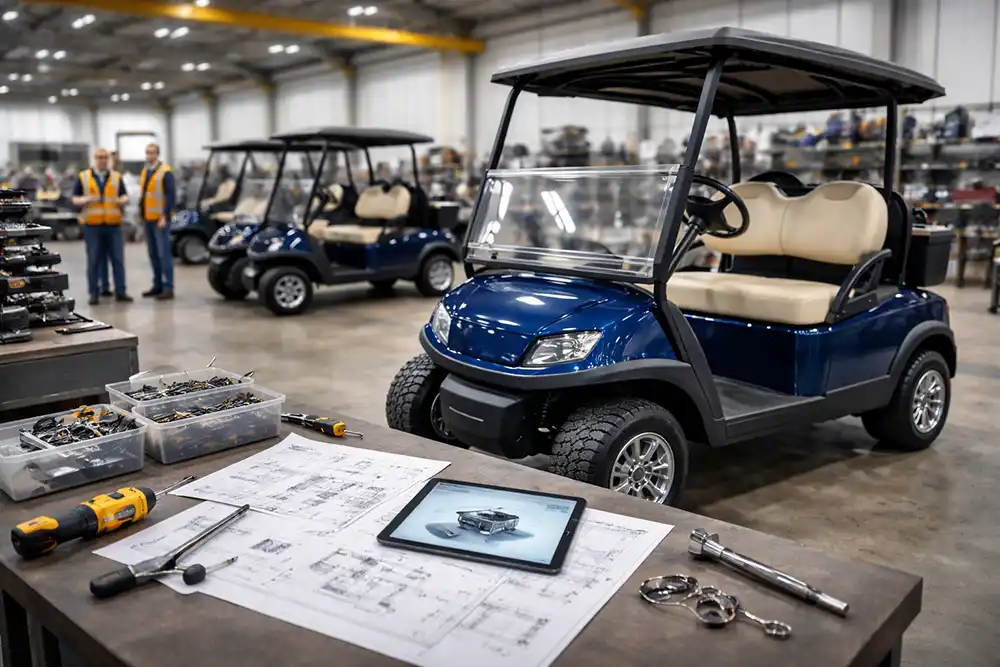
Golf cart manufacturing in the United States has evolved far beyond its original purpose on the fairway. What began as a niche product for golfers has transformed into a rapidly expanding industry serving residential communities, commercial properties, resorts, and municipalities. Today, golf carts are used for transportation, utility work, and even street legal commuting in certain areas.
American manufacturers have played a central role in this growth by focusing on innovation, customization, and quality. Companies are continually refining their designs to meet the demands of modern consumers who expect reliability, safety, and advanced features. Electric models have become especially popular due to their environmental benefits and lower operating costs. As demand increases, so does the complexity of manufacturing processes and product offerings.
With this expansion comes a greater need for precision across all aspects of production. From engineering and assembly to compliance and distribution, every stage must be carefully managed. One of the most overlooked yet essential components of this process is documentation.
Understanding the Manufacturing Process
The production of golf carts involves multiple stages that require coordination and technical expertise. It begins with design and engineering, where teams develop specifications for frames, power systems, and components. These designs must account for durability, performance, and safety while also allowing for customization.
Once designs are finalized, manufacturers move into sourcing materials and components. This includes batteries, motors, controllers, suspension systems, and body panels. Each component must meet strict quality standards to ensure the final product performs as expected.
Assembly follows, where skilled technicians bring all the components together. This stage often includes both manual and automated processes. Precision is critical, as even small errors can impact performance or safety. After assembly, each cart undergoes testing and quality control to verify that it meets all specifications.
Throughout this entire process, documentation serves as the backbone that keeps everything aligned. Without accurate records and clear instructions, the risk of errors increases significantly.
Why Documentation Matters in Golf Cart Manufacturing
Documentation in manufacturing is more than just a formality. It is a critical tool that ensures consistency, compliance, and efficiency. For golf cart manufacturers, this includes technical manuals, assembly instructions, parts catalogs, safety guidelines, and compliance records.
Clear documentation allows workers to perform their tasks accurately and efficiently. It provides step by step guidance that reduces the likelihood of mistakes during assembly. This is especially important as product lines become more complex and customizable.
In addition to supporting internal operations, documentation plays a key role in customer experience. Owners rely on manuals to understand how to operate and maintain their golf carts. Service technicians depend on accurate information to diagnose and repair issues. Poor documentation can lead to confusion, frustration, and increased support costs.
Regulatory compliance is another important factor. Golf carts must meet various safety and environmental standards, particularly if they are designed for street legal use. Proper documentation helps manufacturers demonstrate compliance and avoid potential legal issues.
The Impact of Documentation on Product Quality
High quality documentation directly contributes to high quality products. When instructions are clear and consistent, workers can follow them with confidence. This leads to fewer errors, improved efficiency, and better overall outcomes.
On the other hand, inadequate documentation can create significant challenges. Inconsistent or outdated information can result in incorrect assembly, defective products, and costly rework. These issues not only affect production but also damage a manufacturer’s reputation.
In the center of many operational challenges are documentation mistakes that lead to product liability that often go unnoticed until they cause larger problems. These errors can include incorrect specifications, missing steps, or unclear instructions. Addressing these issues requires a proactive approach that prioritizes accuracy and continuous improvement.
Manufacturers that invest in professional documentation practices are better positioned to maintain high standards. This includes regular reviews, updates, and collaboration between engineering and production teams.
Supporting Customization and Innovation
One of the defining characteristics of the golf cart industry is the high level of customization available to customers. Buyers can choose from a wide range of features, including seating configurations, lighting systems, sound systems, and performance upgrades. While this flexibility is a major selling point, it also adds complexity to the manufacturing process.
Documentation plays a vital role in managing this complexity. Detailed records ensure that each custom order is built according to specifications. Assembly teams rely on accurate instructions to handle variations without compromising quality.
Innovation further increases the importance of documentation. As manufacturers introduce new technologies such as lithium batteries, advanced controllers, and connected features, they must provide clear guidance on installation and operation. Without proper documentation, even the most advanced features can become liabilities.
Enhancing Safety and Compliance
Safety is a top priority in golf cart manufacturing. Although these vehicles are smaller than traditional automobiles, they still pose risks if not properly designed and maintained. Documentation helps mitigate these risks by providing clear instructions and safety guidelines.
For example, assembly manuals must include torque specifications, wiring diagrams, and safety checks to ensure that each cart is built correctly. User manuals must explain how to operate the vehicle safely, including charging procedures, load limits, and maintenance requirements.
Compliance with regulations is closely tied to documentation. Manufacturers must adhere to standards set by various agencies, particularly for street legal models. This may include requirements related to lighting, braking systems, and speed limitations. Accurate documentation is essential for demonstrating compliance and passing inspections.
The Role of Digital Transformation
Digital tools are transforming the way manufacturers create and manage documentation. Traditional paper based systems are being replaced by digital platforms that offer greater flexibility and accessibility. These systems allow for real time updates, version control, and easier distribution.
For golf cart manufacturers, digital documentation can streamline operations and improve communication. Workers can access instructions on tablets or other devices directly on the production floor. This reduces the risk of using outdated information and improves overall efficiency.
Digital platforms also support better collaboration between teams. Engineers can update specifications and share them instantly with production staff. Service teams can access the latest manuals and troubleshooting guides, improving their ability to assist customers.
As the industry continues to evolve, manufacturers that embrace digital documentation will have a competitive advantage.
Building Trust with Customers and Partners
Documentation is not only an internal tool but also a reflection of a manufacturer’s professionalism. Clear and comprehensive manuals demonstrate a commitment to quality and customer satisfaction. They help build trust with buyers, distributors, and service providers.
For customers, well written documentation enhances the ownership experience. It provides confidence in the product and reduces the likelihood of issues. For partners, it ensures that they have the information needed to sell, service, and support the product effectively.
Manufacturers that prioritize documentation are more likely to establish strong relationships and maintain a positive reputation in the market.
Conclusion
Golf cart manufacturing in the United States is a dynamic and growing industry that demands precision, innovation, and reliability. As products become more advanced and customizable, the importance of documentation continues to increase.
From guiding assembly processes to supporting customer experience and ensuring compliance, documentation plays a critical role at every stage of the product lifecycle. Manufacturers that recognize its value and invest in high quality practices will be better equipped to meet the challenges of a competitive market.
In an industry where even small errors can have significant consequences, clear and accurate documentation is not just a support function. It is a fundamental component of success.
Disclaimer
The information provided in this article is for general informational and educational purposes only. While every effort has been made to ensure accuracy, completeness, and relevance, the content should not be considered professional, legal, engineering, or manufacturing advice. Readers are encouraged to consult with qualified professionals or industry experts before making any decisions related to golf cart manufacturing, product development, compliance, or documentation practices.
The discussion of processes, standards, and documentation practices may vary depending on specific manufacturers, regulatory requirements, and regional guidelines within the United States. No guarantees are made regarding the applicability of this information to any particular business, operation, or situation.
Any references to industry practices, technologies, or documentation considerations are intended to provide general insight and should not be interpreted as endorsements or requirements. The author and publisher assume no responsibility or liability for any errors, omissions, or outcomes resulting from the use of this information.
By reading this article, you acknowledge that any actions taken based on the content are at your own discretion and risk.